Your Thyroid Gland
What is the Thyroid?
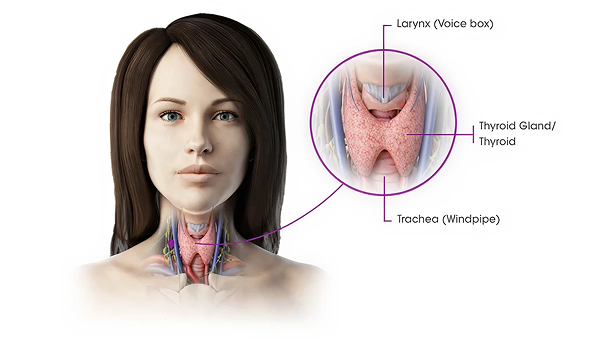
The thyroid gland, or thyroid, is located at the base of the neck just below the Adam’s apple. It is the shape of a butterfly. One wing, or “lobe,” of the thyroid is located on each side of the trachea (often referred to as the “windpipe”).1
The Function of the Thyroid is to:
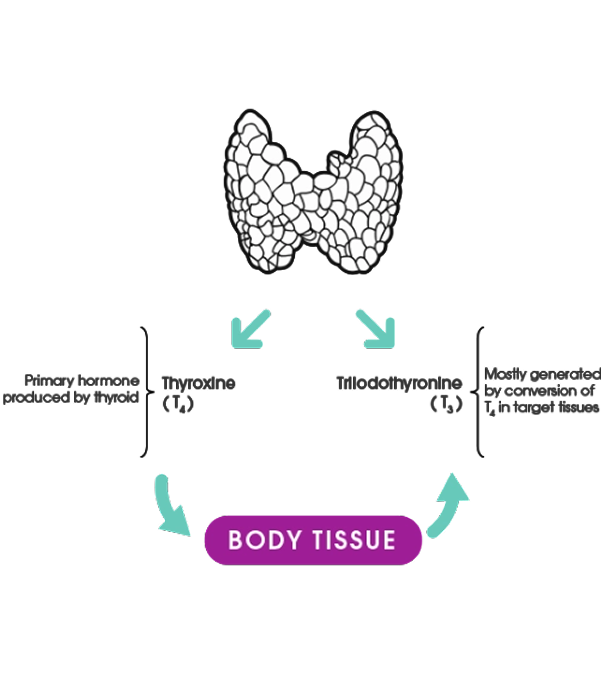
The thyroid gland produces and stores 2 hormones - T3 and T4. These hormones affect almost every cell in the body1
Produce and Store Thyroid Hormones2
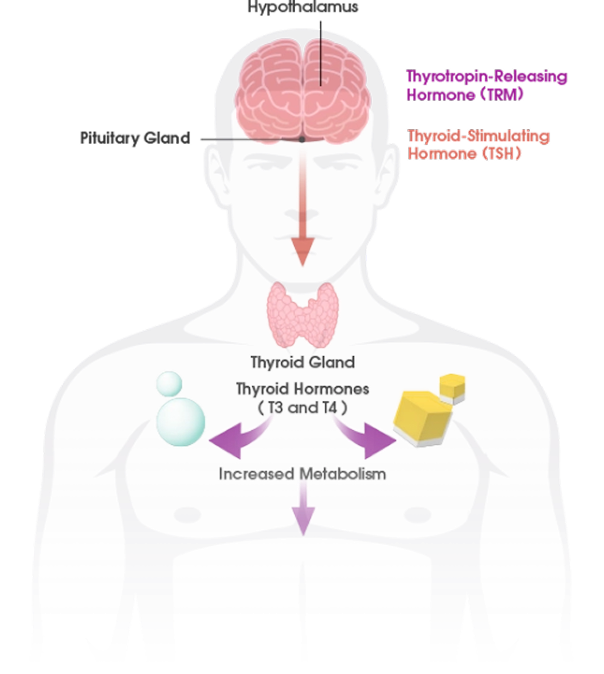
The activity of the thyroid gland is regulated by the pituitary gland through the release of thyroid stimulating hormone (TSH)1
Release them into the bloodstream2
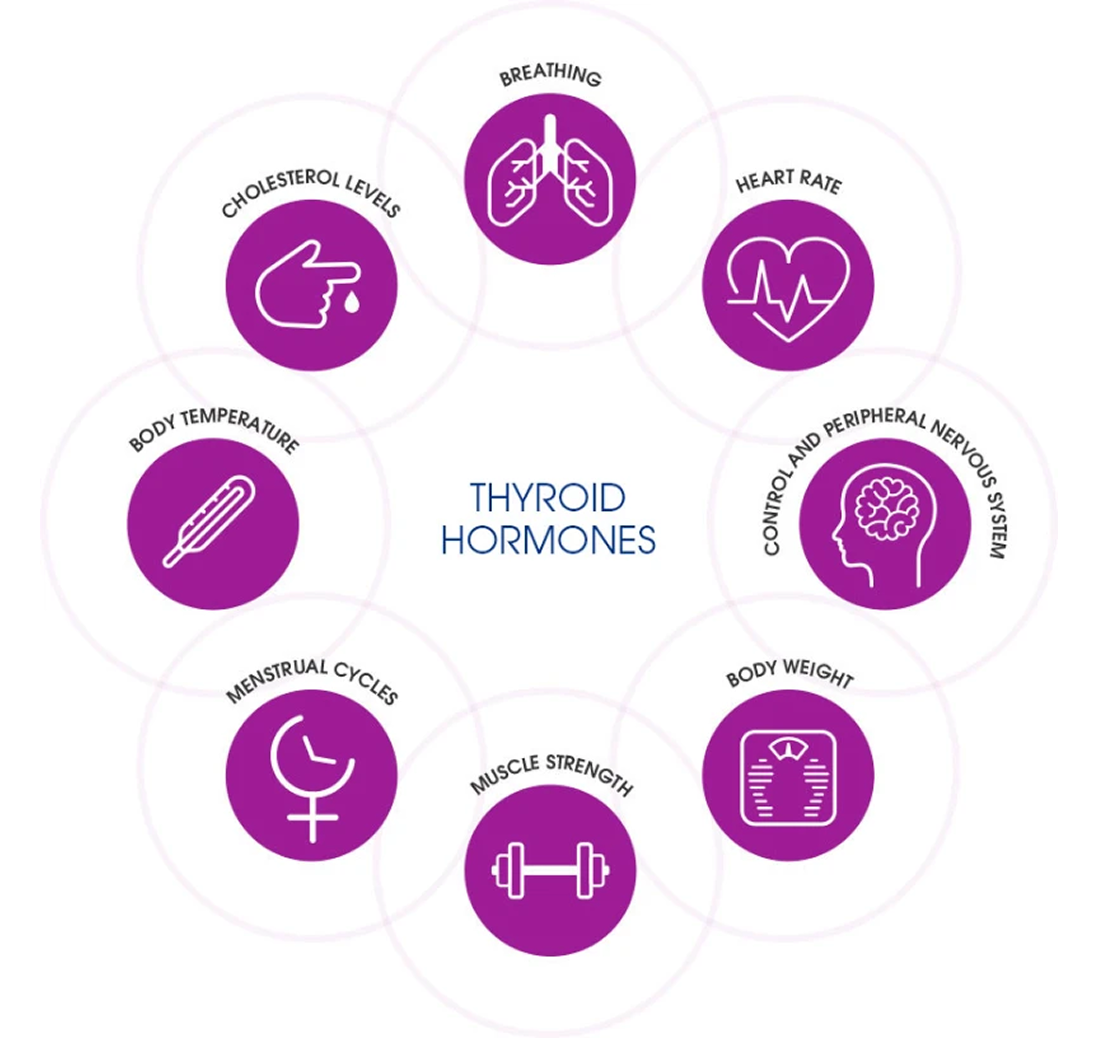
Thyroid hormones regulate vital body functions3
The feedback system involving the hypothalamus, pituitary, and thyroid2,4
The pituitary gland controls the amount of thyroid hormones produced by the thyroid. The pituitary is located at the base of the brain. Another part of the brain, the hypothalamus, helps the pituitary do its job.
The hypothalamus produces thyroid releasing hormone (TRH), which stimulates the pituitary to release thyroid stimulating hormone (TSH). TSH stimulates the thyroid to release thyroid hormones.
The Hypothalamus and the Pituitary Glands Affect Thyroid Function3,5
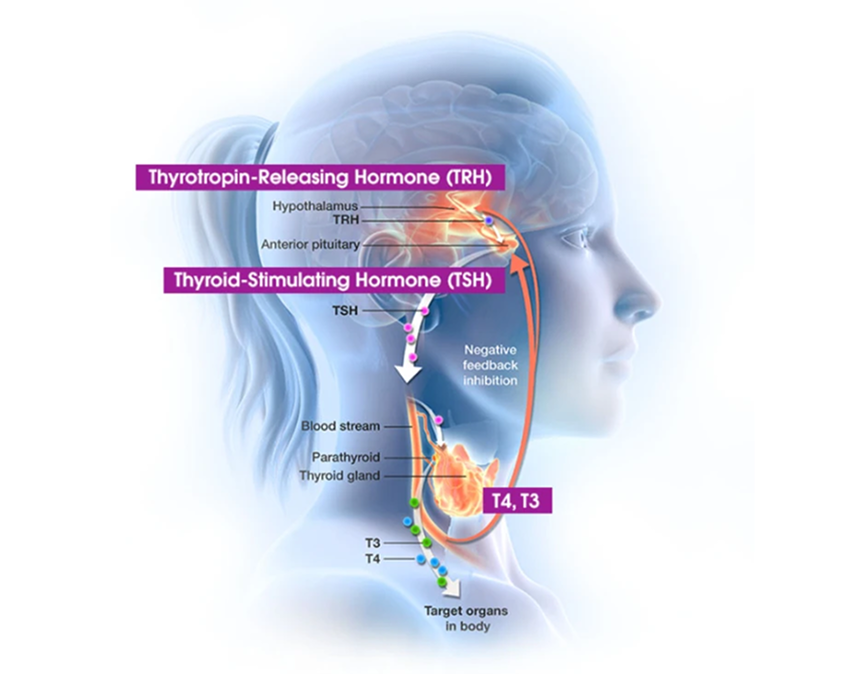
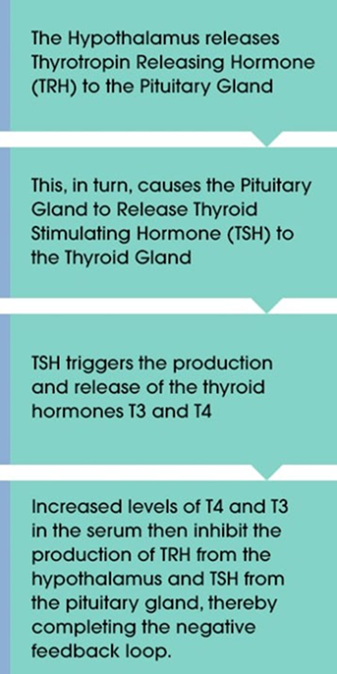
The pituitary, hypothalamus and thyroid all work together in a feedback loop to control the amount of thyroid hormones in the body.2,4
The system works similarly to the way a thermostat controls the temperature in a room. Just as the thermometer in a thermostat senses the temperature of a room, the hypothalamus and pituitary gland sense the amount of thyroid hormones in the bloodstream.
-
If the level is low, the pituitary releases TSH to signal the thyroid to "turn on the heat" by producing more thyroid hormones.
-
If the level is high, the pituitary decreases TSH production to "turn down the heat."
Resources

Low-Iodine Diet
Learn why your doctor may ask you to avoid certain foods and medicines that contain iodine for a few weeks before your ablation procedure.

Doctor Discussion Guide
Use this resource to help make the most of your next appointment with your endocrinologist

References
- Hoagland TM. Thyroid Anatomy: Overview, Microscopic Structure, Fascia and Ligament. Medscape. Updated March 10, 2025. Accessed February 4, 2026. https://emedicine.medscape.com/article/835535-overview
- Sargis RM. How Your Thyroid Works- Controlling hormones essential to your metabolism. HealthCentral. Updated October 21, 2019. Accessed February 4, 2026. https://www.healthcentral.com/condition/thyroid/how-your-thyroid-works
- Brady B. Thyroid Gland: Overview — How the Endocrine Gland Functions, and Symptoms of Hyperthyroidism and Hypothyroidism. HealthCentral. Updated March 26, 2019. Accessed February 4, 2026. https://www.healthcentral.com/condition/thyroid/thyroid-gland-overview.
- In brief: How does the thyroid gland work? InformedHealth.org. Updated May 28, 2024. Bookshelf ID NBK279388. Accessed February 4, 2026. https://www.ncbi.nlm.nih.gov/books/NBK279388/
- Mariotti S, Beck-Peccoz P. Physiology of the Hypothalamic-Pituitary-Thyroid Axis. In: Feingold KR, Adler RA, Ahmed SF, et al., eds. Endotext. South Dartmouth (MA): http://MDText.com , Inc.; April 20, 2021.
Important Safety Information and Indication
Thyrogen (thyrotropin alfa) is used to help identify thyroid disease by testing the blood for a hormone called thyroglobulin in the follow up of patients with a certain type of thyroid cancer known as well differentiated thyroid cancer. It is used with or without a radiology test using a form of iodine.
Limitations of Use:
- The effect of Thyrogen on long term thyroid cancer outcomes has not been determined.
- When Thyrogen is used to help detect thyroid cancer, there is still a chance all or parts of the cancer could be missed.
Thyrogen is also used to help patients prepare for treatment with a form of iodine, called radioiodine, to remove leftover thyroid tissue in patients who have had surgery to take out the entire thyroid gland for patients with well differentiated thyroid cancer who do not have signs of thyroid cancer which has spread to other parts of the body.
Limitations of Use:
- In a study of people being prepared for treatment with a form of iodine after thyroid surgery, results were similar between those who received Thyrogen and those who stopped taking their thyroid hormone for up to 5 years after treatment. Researchers do not know if results would be similar over a longer period of time.
Patients should not use Thyrogen with radioiodine if they have a contraindication to the use of radioiodine. Please consult with your doctor for a list of contraindications for radioiodine.
Thyrogen can cause serious side effects, including:
Thyrogen-Induced Hyperthyroidism:
- There have been reports of events that led to death in patients who have not had surgery to have their thyroid gland removed, and in patients with thyroid cancer cells that have spread to other parts of the body.
- Patients over 65 years old with large amounts of leftover thyroid tissue after surgery, or with a history of heart disease, should discuss with their physicians the risks and benefits of Thyrogen.
- Thyrogen can be administered in the hospital for patients at risk for complications from Thyrogen administration.
Stroke:
- Since Thyrogen was first approved for use, there have been reports of central nervous system problems such as stroke in young women who have a higher chance of having a stroke, and weakness on one side of the body. The relationship between THYROGEN administration and stroke is unknown. Patients should remain hydrated prior to treatment with Thyrogen.
Sudden Rapid Tumor Enlargement:
- Leftover thyroid tissue after surgery and cancer cells that have spread to other parts of the body can quickly grow and become painful after Thyrogen administration. Patients with cancer cells near their windpipe, in their central nervous system, or in their lungs may need treatment with a glucocorticoid (a medication to help prevent an increase in the size of the cancer cells before using Thyrogen.)
Risks Associated with Radioiodine Treatment:
- If THYROGEN is administered with radioiodine (RAI), the serious side effects for RAI apply to this combination regimen. Please consult with your doctor for a list of contraindications for radioiodine.
ADVERSE REACTIONS
In clinical studies, the most common side effects reported were nausea and headache.
USE IN SPECIFIC PATIENT POPULATIONS
Pregnant patients: Notify your healthcare provider immediately in the event of a pregnancy. If THYROGEN is administered with radioiodine, the combination regimen should not be used in pregnant women. Thyrogen should be given to a pregnant woman only if the doctor thinks there is a clear need for it.
Breastfeeding patients: If THYROGEN is administered with radioiodine, the combination regimen should not be used in breastfeeding women. It is not known whether Thyrogen can appear in human milk. Breastfeeding women should discuss the benefits and risks of Thyrogen with their physician.
Children: Safety and effectiveness in young patients (under the age of 18) have not been established.
Elderly: Studies do not show a difference in the safety and effectiveness of Thyrogen between adult patients less than 65 years and those over 65 years of age.
Patients with kidney disease: Thyrogen exits the body much slower in dialysis patients and can lead to longer high TSH levels.
Click here for full Prescribing Information including Serious Side Effects.
Click here for full Patient Information including Serious Side Effects.
Click here to learn more about Sanofi’s commitment to fighting counterfeit drugs.