
Acute Hypothyroidism
After having your thyroid removed, acute hypothyroidism can occur when the doctor stops your thyroid hormone for a period of 4-6 weeks, to prepare you for radioactive iodine (RAI) ablation or diagnostic testing.1
After your surgery your doctor may decide that additional treatments or tests are needed that require a high level of thyroid stimulating hormone (TSH). To obtain a high level of TSH your doctor may choose to stop your thyroid hormone medication for 4-6 weeks. This is called thyroid hormone withdrawal (THW) to prepare your body for:
- Treatment with radioactive iodine (RAI)
- Diagnostic testing with either a blood test and/or a whole-body scan
During the THW phase, you may experience some of the signs and symptoms of acute hypothyroidism.
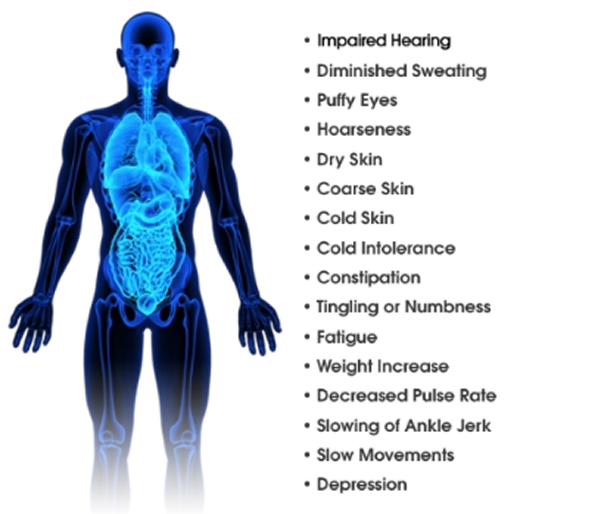
Stopping thyroid hormone medication for 4-6 weeks may cause you to have unwanted symptoms.2
Discuss Options with your doctor that help you avoid thyroid hormone withdrawal and its associated symptoms of acute hypothyroidism.

Results of a multi-center survey showcasing differing perspectives of doctors and patients regarding the symptoms of acute hypothyroidism caused by thyroid hormone withdrawal (THW)3
The multi-center survey showed a substantial gap in the level of perception of the severity of acute hypothyroid symptoms between physicians and patients during thyroid hormone withdrawal.
The Survey Called to Attention Some Important Points:
Doctor Perspectives
Patient Perspectives
Get the “My Doctor Discussion Guide”
Make the most of your next endocrinologist appointment with our Doctor Discussion Guide
References
- MyThyroid.com. Radioactive Iodine for the Treatment of Thyroid Cancer. Accessed March 2, 2026. https://www.mythyroid.com/radioactiveiodinecancer.html
- Burman KD. Hypothyroidism Symptoms Following Temporary Withdrawal from Thyroid Hormone. ThyCa: Thyroid Cancer Survivors’ Association. Accessed February 4, 2026. https://thyca.org/pap-fol/more-hypothyroidism/
- Lim DJ, Kim WB, Kim BH, et al. Differences in physicians' and patients' perception of acute hypothyroid symptoms induced by thyroid hormone withdrawal in thyroid cancer patients: a multicenter survey in Korea. Eur Thyroid J. 2015;4(1):48-54.
Important Safety Information and Indication
Thyrogen (thyrotropin alfa) is used to help identify thyroid disease by testing the blood for a hormone called thyroglobulin in the follow up of patients with a certain type of thyroid cancer known as well differentiated thyroid cancer. It is used with or without a radiology test using a form of iodine.
Limitations of Use:
- The effect of Thyrogen on long term thyroid cancer outcomes has not been determined.
- When Thyrogen is used to help detect thyroid cancer, there is still a chance all or parts of the cancer could be missed.
Thyrogen is also used to help patients prepare for treatment with a form of iodine, called radioiodine, to remove leftover thyroid tissue in patients who have had surgery to take out the entire thyroid gland for patients with well differentiated thyroid cancer who do not have signs of thyroid cancer which has spread to other parts of the body.
Limitations of Use:
- In a study of people being prepared for treatment with a form of iodine after thyroid surgery, results were similar between those who received Thyrogen and those who stopped taking their thyroid hormone for up to 5 years after treatment. Researchers do not know if results would be similar over a longer period of time.
Patients should not use Thyrogen with radioiodine if they have a contraindication to the use of radioiodine. Please consult with your doctor for a list of contraindications for radioiodine.
Thyrogen can cause serious side effects, including:
Thyrogen-Induced Hyperthyroidism:
- There have been reports of events that led to death in patients who have not had surgery to have their thyroid gland removed, and in patients with thyroid cancer cells that have spread to other parts of the body.
- Patients over 65 years old with large amounts of leftover thyroid tissue after surgery, or with a history of heart disease, should discuss with their physicians the risks and benefits of Thyrogen.
- Thyrogen can be administered in the hospital for patients at risk for complications from Thyrogen administration.
Stroke:
- Since Thyrogen was first approved for use, there have been reports of central nervous system problems such as stroke in young women who have a higher chance of having a stroke, and weakness on one side of the body. The relationship between THYROGEN administration and stroke is unknown. Patients should remain hydrated prior to treatment with Thyrogen.
Sudden Rapid Tumor Enlargement:
- Leftover thyroid tissue after surgery and cancer cells that have spread to other parts of the body can quickly grow and become painful after Thyrogen administration. Patients with cancer cells near their windpipe, in their central nervous system, or in their lungs may need treatment with a glucocorticoid (a medication to help prevent an increase in the size of the cancer cells before using Thyrogen.)
Risks Associated with Radioiodine Treatment:
- If THYROGEN is administered with radioiodine (RAI), the serious side effects for RAI apply to this combination regimen. Please consult with your doctor for a list of contraindications for radioiodine.
ADVERSE REACTIONS
In clinical studies, the most common side effects reported were nausea and headache.
USE IN SPECIFIC PATIENT POPULATIONS
Pregnant patients: Notify your healthcare provider immediately in the event of a pregnancy. If THYROGEN is administered with radioiodine, the combination regimen should not be used in pregnant women. Thyrogen should be given to a pregnant woman only if the doctor thinks there is a clear need for it.
Breastfeeding patients: If THYROGEN is administered with radioiodine, the combination regimen should not be used in breastfeeding women. It is not known whether Thyrogen can appear in human milk. Breastfeeding women should discuss the benefits and risks of Thyrogen with their physician.
Children: Safety and effectiveness in young patients (under the age of 18) have not been established.
Elderly: Studies do not show a difference in the safety and effectiveness of Thyrogen between adult patients less than 65 years and those over 65 years of age.
Patients with kidney disease: Thyrogen exits the body much slower in dialysis patients and can lead to longer high TSH levels.
Click here for full Prescribing Information including Serious Side Effects.
Click here for full Patient Information including Serious Side Effects.
Click here to learn more about Sanofi’s commitment to fighting counterfeit drugs.